
Enough. Enough. Enough.
The truths that animate me

Before we dive in to the real stuff today, I wanted to check in:
Do you have your copy of Hope for the Mission yet???
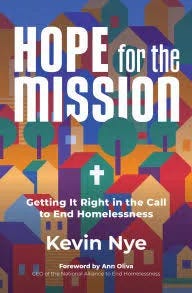
It’s been out a couple months, but I get it! It’s been a weird year.
But if you haven’t gotten yours yet, I wanted to offer the opportunity to get a Signed copy straight from me. Many of you took advantage of the Pre-Order option to get a signed copy through my local bookstore, but now that it’s out, I wanted to make sure folks could still get one.
If you’d like a Signed copy of Hope for the Mission for you or someone else or many someone-elses, reply to this email and we’ll get it sorted. Thank you!
Today’s post is deeply personal. It’s about some truths that I uncovered through therapy that have helped me know at my core who I am and what I believe. These truths are what have sustained me through seasons of burnout, despair, hopelessness, and rage. (Shoutout to therapy, btw. If you’ve been waiting for a sign or confirmation to seek it out, consider this the motivation you’ve been waiting for—especially you, men!)
I share these truths because I hope they may resonate with you, help name something for you, and because arriving at them was hard fought. Your truths will, of course, be your truths, but maybe something within mine can help elicit yours.
My truths all kept coming back to one word. It’s a broad word that holds a reservoir of meaning:
Enough.
This wide word has come to mean three different things to me, all of which I hold true and sacred and deep within my heart.
1. I am enough.
Of course, off the bat, I have to start with the hardest one. I learned the hard way that all of the values and beliefs I hold about the world and the spiritual can still mask a deep unhealthiness if I never internalize right beliefs about myself. Long before Ken in Barbie declared “I am Kenough,” I had started learning to tell myself this—I am enough—but not because I really believed it yet. That came much later.
When I started working in homelessness, my motives weren’t entirely altruistic. Like many people who find themselves in helping work, I discovered (again, in therapy) that so much of my devotion to this work was out of a deep emptiness I felt in my identity. I needed to prove myself a good, compassionate, selfless person—to the world, to God, but mostly to myself. I had a deeply held suspicion of myself, an imposter syndrome, that served to question every motive, every action, every choice, with the assumption that it was all fake. The origins of this voice are complicated, but I knew its timbre well. And what I learned far too fast when I got deep into this work was that that voice would never actually be satisfied by doing more. And trust me… I tried!
Learning to tell myself “I am enough” was hard, and for years I felt like I was lying. But over time it started to feel true. Over time I felt like I could love myself and be passionate about the work I do, rather than loving myself because of the work that I do. I learned I could care about myself simply because I was worth caring about, and not as a reward for working. I stopped thinking about self-care as “You can’t pour from an empty cup” and instead started thinking, “Everyone deserves a full cup.”
One day I had the realization that if I were to disappear off the earth today, I could say I had done enough. And instead of moving me to comfortability or wanting to stop, it changed my relationship to the work entirely. I have the capacity, the privilege, and yes even a responsibility to the work that I do. But my identity—my enoughness—was no longer entangled with it. And it was absolutely liberating.
2. There is enough
This belief came to me early in my theological education, and I wrote about it extensively in Grace Can Lead Us Home. It’s about the myth of scarcity and the truth of abundance. Our world likes to insist that there isn’t enough to go around—money, food, water, work, housing, resources, time, energy, love. This lie convinces us that it is therefore normal or “just the way the world works” that some people get to have these things and others do not.
When we can be convinced of that, then we try to make sense of it. This is where so many more myths emerge—if there’s not enough to go around, there have to be reasons why some are doing fine and others aren’t. We can be deceived into believing that things like hunger, poverty, and homelessness are the result of certain people not trying hard enough, not being good enough, or being responsible enough. The lie that I believed about myself—that I’m not enough—is just as easy to believe about others if you don’t believe that there’s enough of what we need to go around.
But it is a lie. There is enough—enough food, water, space, housing, time, energy, and love for us all to have what we need. But these resources are withheld by those who would hoard more than they need for themselves. And to justify it, they convince us that there is just not enough to go around. We must not believe them.
As a Christian, I cannot believe this lie. I cannot believe that a good and loving God would create a world where there isn’t enough for everyone to live. Scripture is full of lessons from God about how we distribute resources—from God’s instruction to the Israelites in the desert to only take enough manna for the day; the laws to leave crops on the edges of your harvest for travelers and wanderers; to the redistribution of seized property in the laws of Deuteronomy.
And then there’s Jesus, who not only taught that scarcity was a lie, but actually practiced abundance. Here’s what I wrote in Grace Can Lead Us Home about this:
“[Jesus turning water into wine] gives us our first example of Jesus’ extraordinary provision, which reverberates throughout the rest of his ministry. Whenever there was not enough, Jesus provided in excess. Not enough wine for the celebration? Check again. The crowds are hungry? Jesus multiplies bread and fish until there are basketfuls left over! Jesus declares “more than enough, and better than you imagined.” In a word, Jesus practiced abundance. One of my favorite biblical scholars [Walter Brueggemann] describes Jesus’ ministry in this way: ‘Filled with God’s generosity, Jesus went around to people suffering from scarcity—of health, of acceptance, of power, of understanding—and replaced it with a gift of abundance.’”
There is enough, and part of my life’s work is to convince those who have been left out that they deserve what they need, and to fight for their right to access it. And when I encounter resistance from those who would lie or perpetuate the lie of scarcity, I turn to my third truth.
3. Enough is enough
When it comes to vulnerable and oppressed people, God takes sides. And so do I.
“Enough is enough” is the voice of justice, advocacy, lament. It’s the kind of hope that says, “I am so convinced that what my neighbors deserve is possible, that I can no longer abide the way things are.” Then I pray, and I act.
It’s the voice of righteous anger; anger aligned with God. It’s the fire of the prophets. It’s the part of Jesus that would call hypocrites “a brood of vipers”, and would flip over tables. Of course, one must always be careful with this kind of anger. It’s easy to project our own anger onto God and call it righteous, or to act out of reactionnary anger and deem it holy as though ends justify means.
There is a reason I set this truth third—I must be deep in the truth of my own enough-ness so that I am acting out of wholeness rather than my emptiness, where insecurities and resentments reside. I must believe that there is enough love and resources for even my enemies, so that I do not act out of the same fear of scarcity that drives them. But if I am grounded firmly in my first two truths, then I can know when “enough is enough”, and stand up, speak up, and act up.
This has looked, for me, like protest, naming names, engaging in conflict, walking away from unjust participation, and so much more. It may look differently for you. But I know there is a season where “enough is enough.”
Again, I do not expect that these truths will match yours. I highly recommend each person do the work, guided by professionals, to find what animates you. Perhaps these will help. Or maybe it’ll just help you know me better.
Or maybe you just got done eavesdropping on my own therapy session and nothing else. If so… sorry? Or thank you?
But I hope it meant something.
These posts will always be free.
But the rest of my work—traveling to speak and lead workshops, creating content, advocacy and direct aid—is enabled and expanded by your support. Consider becoming a Paid subscriber to enhance my reach.
Thanks Kevin. Both for sharing, and for doing the work in the first place.
So good. Thank you